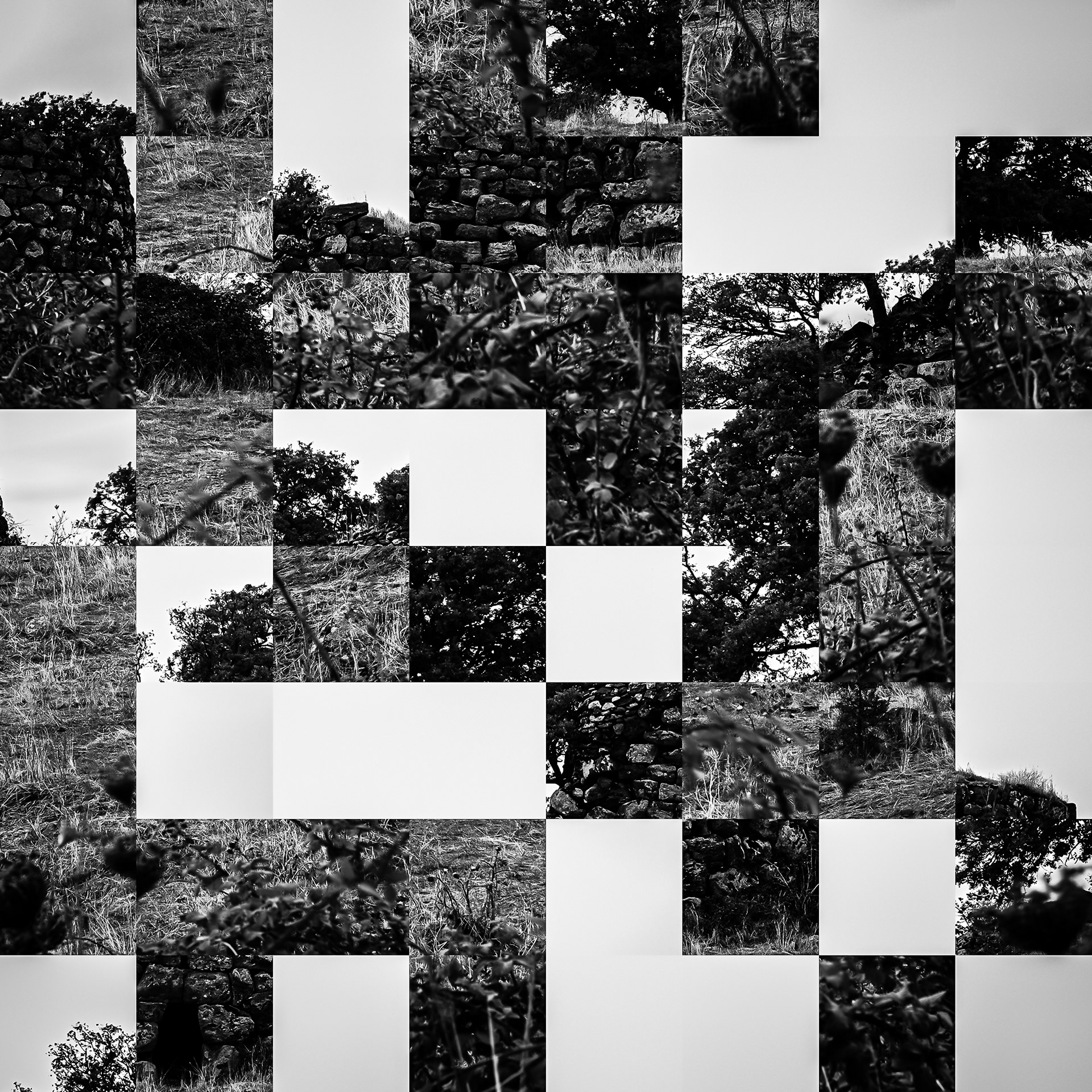
The landscape is treated strictly as raw material and dismantled into modular units. Through this process of structural deconstruction, the territory is reduced to a sequence of isolated fragments.
Within the taxonomic grid, natural elements lose their nomenclature, functioning solely as variations of tone, contrast, and geometry. The collision between the optical attempt to reassemble the image and the strict rigor of the modularity invalidates any aesthetic contemplation.
The output is not the chronicle of a place, but an inventory of parts. It forces the gaze to process how perception operates when visual data is reduced to its minimum terms. It is not a view; it is a construction.