-
Standardized Living Units
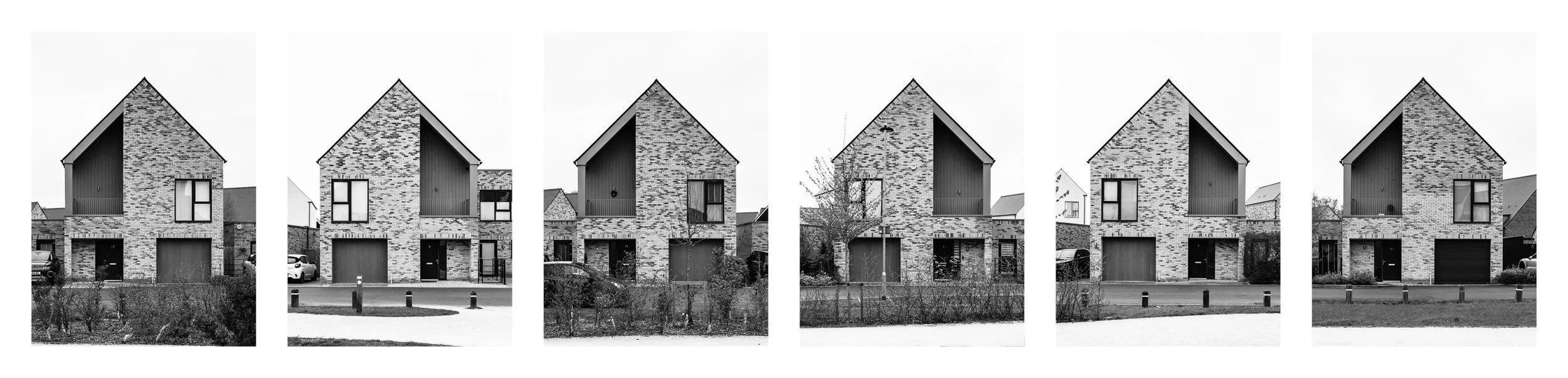
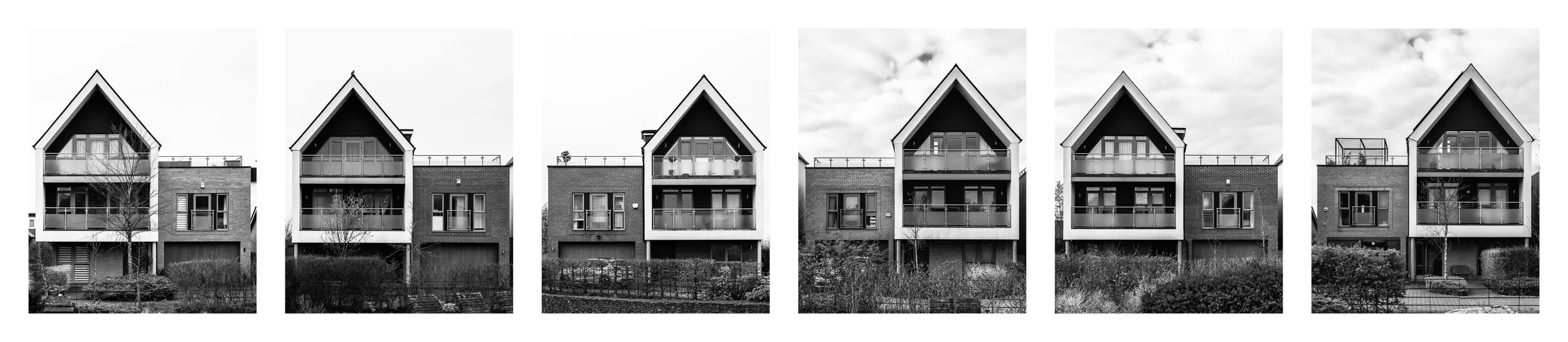
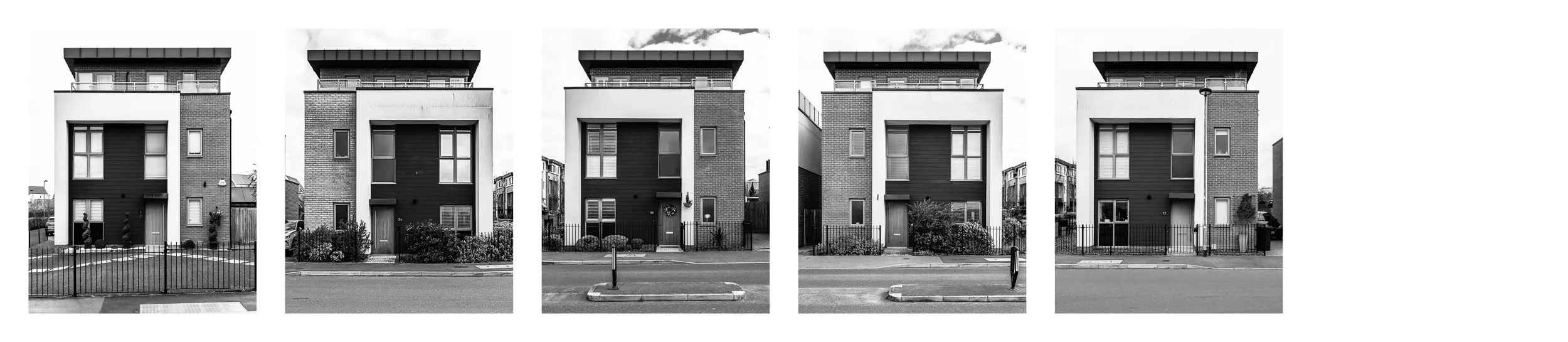
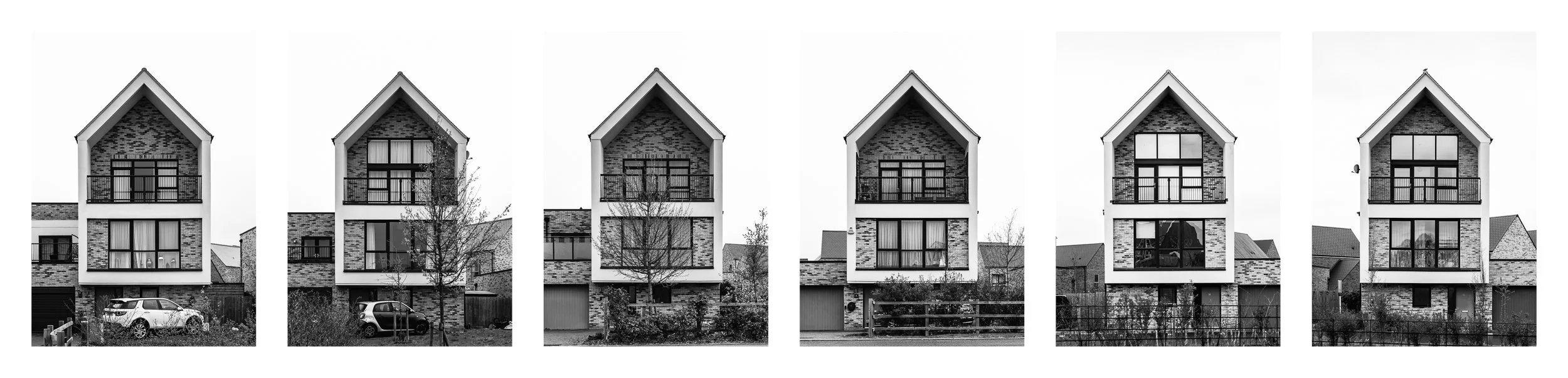
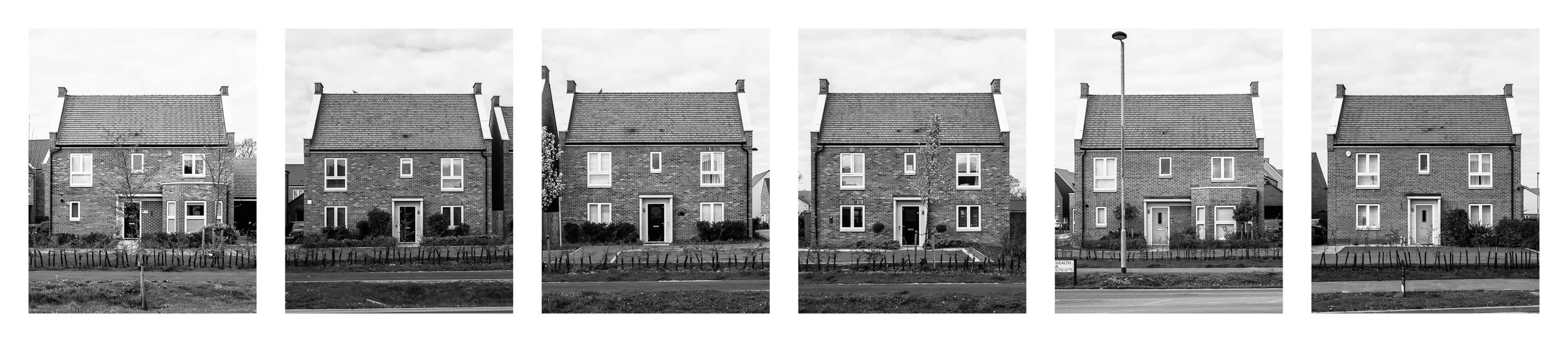
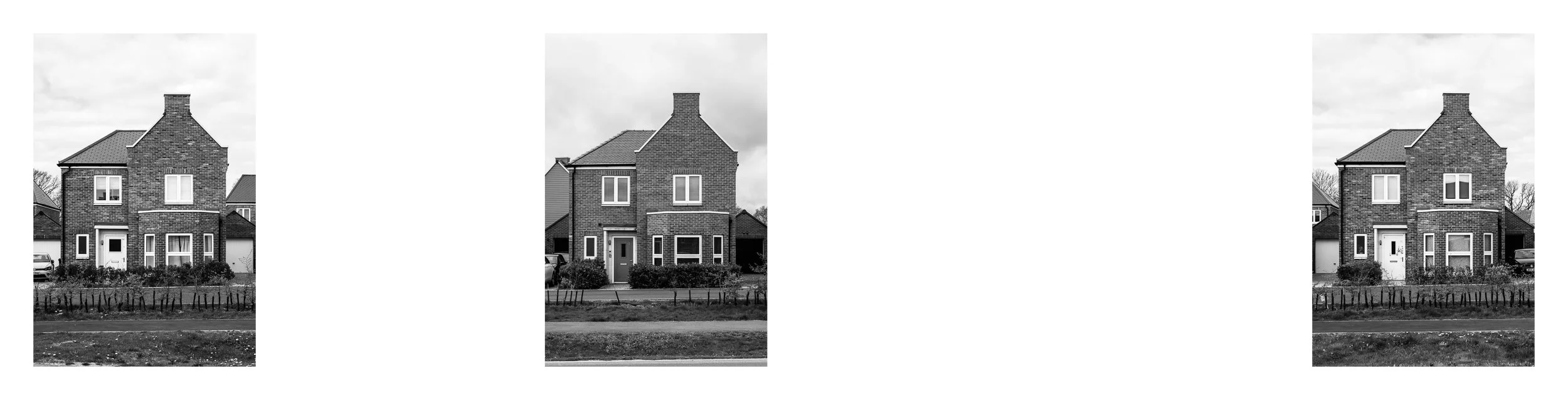
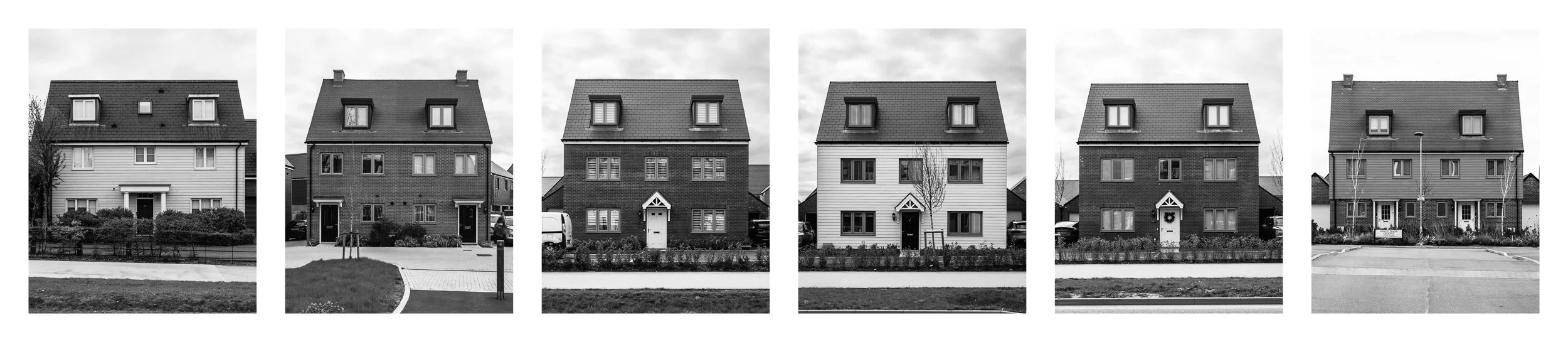
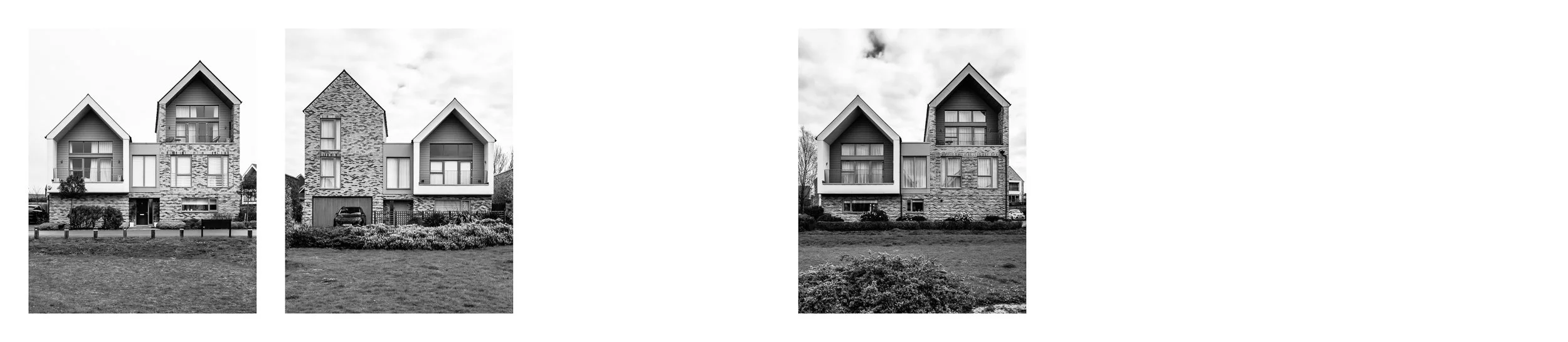
This project maps a modern housing estate by stripping away all architectural romance. Every house is photographed using the exact same formula: straight-on, perfectly centered, and under flat, neutral light. Placed side-by-side in a giant grid, individual homes lose their personal identity.
Within this framework, minor differences—a different colored front door, a parked car, or a pair of curtains—do not make a house unique. Instead, they look like tiny glitches in a copy-paste system. The individual building stops being a home with a story and is reduced to a mass-produced product.
The work does not judge or complain about suburban life. Instead, it acts like a warehouse inventory, showing a factory system where housing is stamped out, distributed, and replicated from a few basic templates.
Empty plots and half-finished rows are not missing pieces; they show that the machine is still running. The grid is alive and expanding. You are not looking at a finished neighborhood, but an assembly line caught in the act of printing more copies of itself.
Seen as a whole, the neighborhood stops looking like a community of families. It reveals itself for what it truly is: an infrastructure of interchangeable blocks—a human storage system built entirely on repetition.