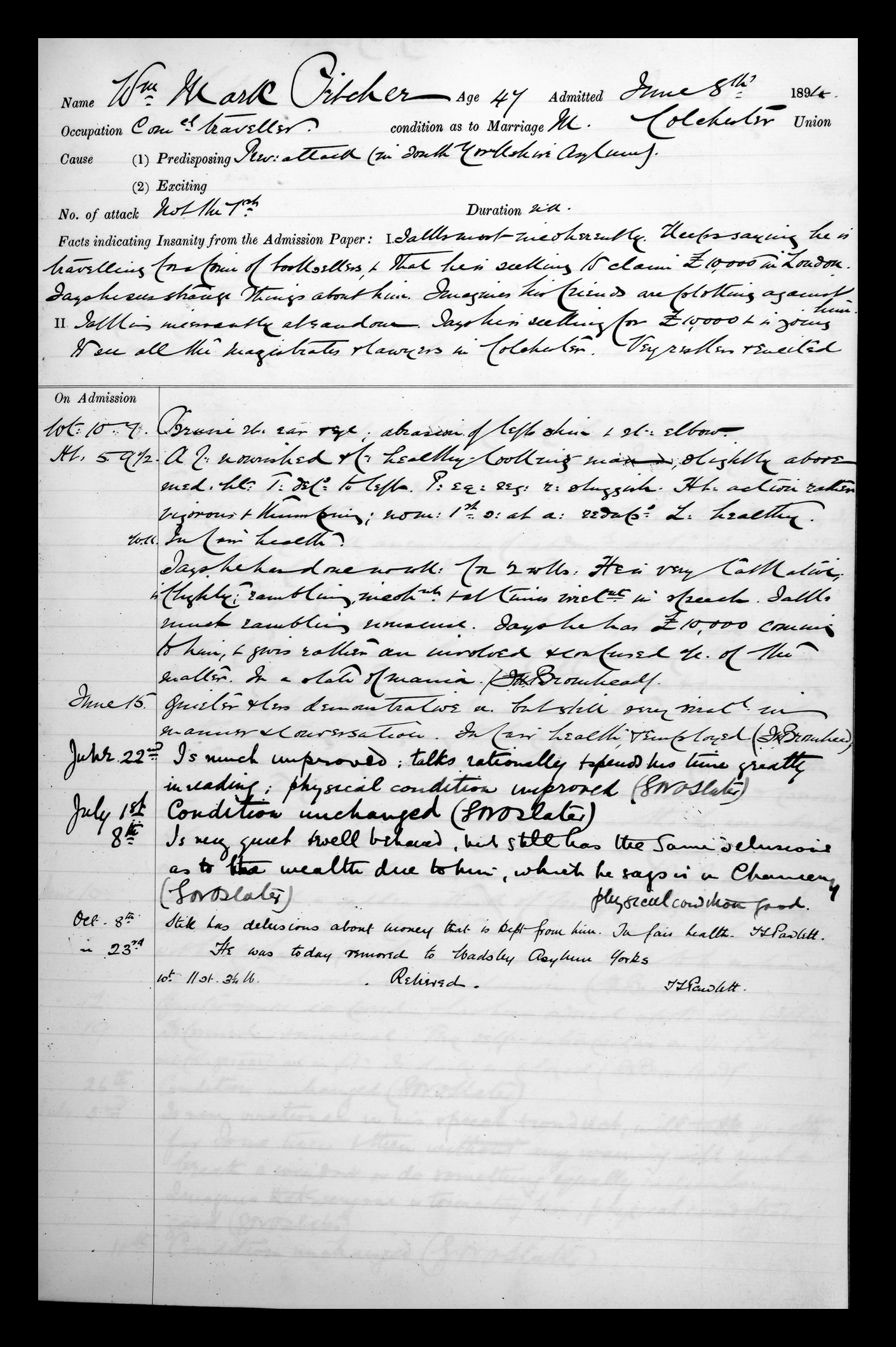
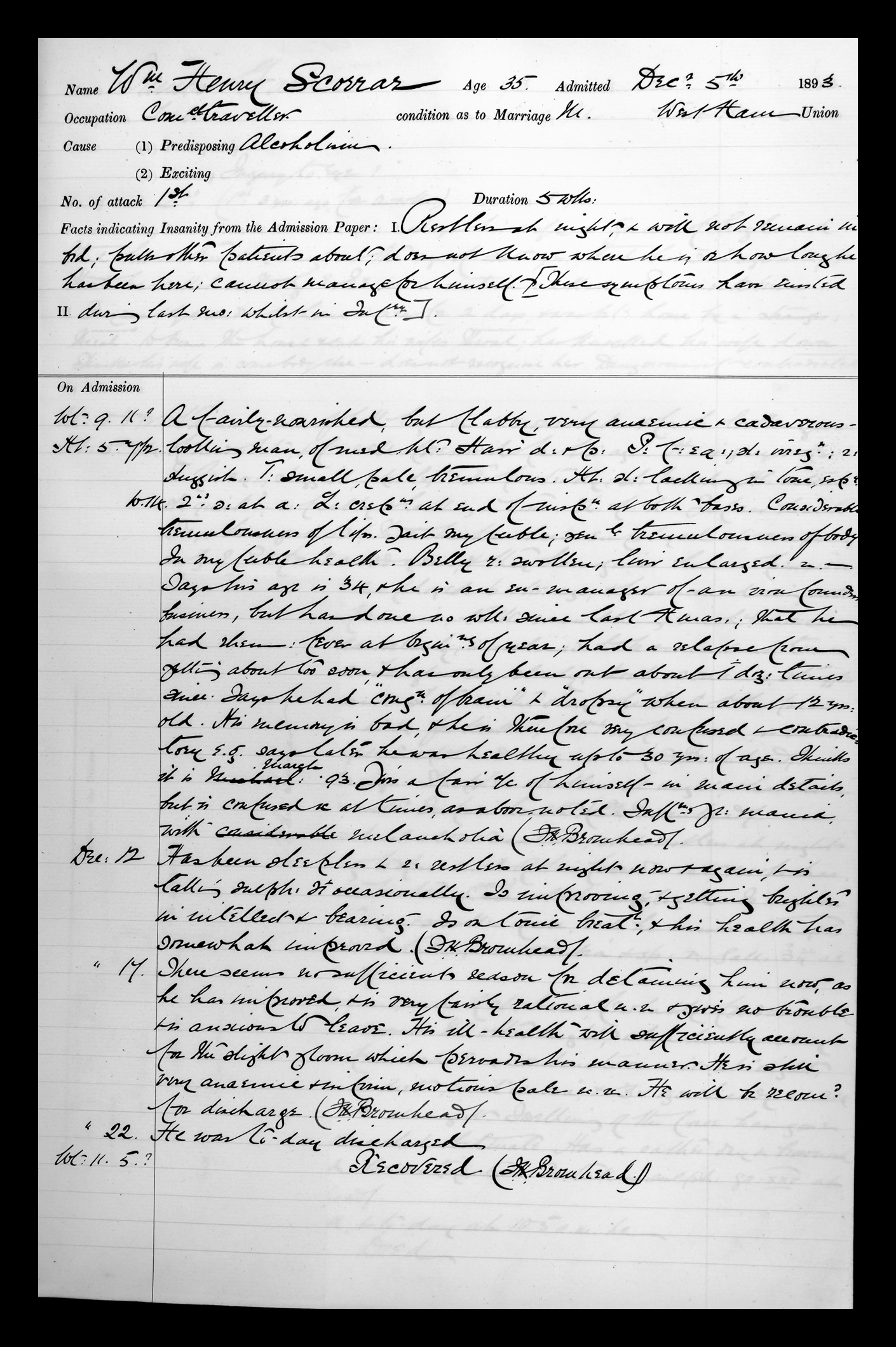
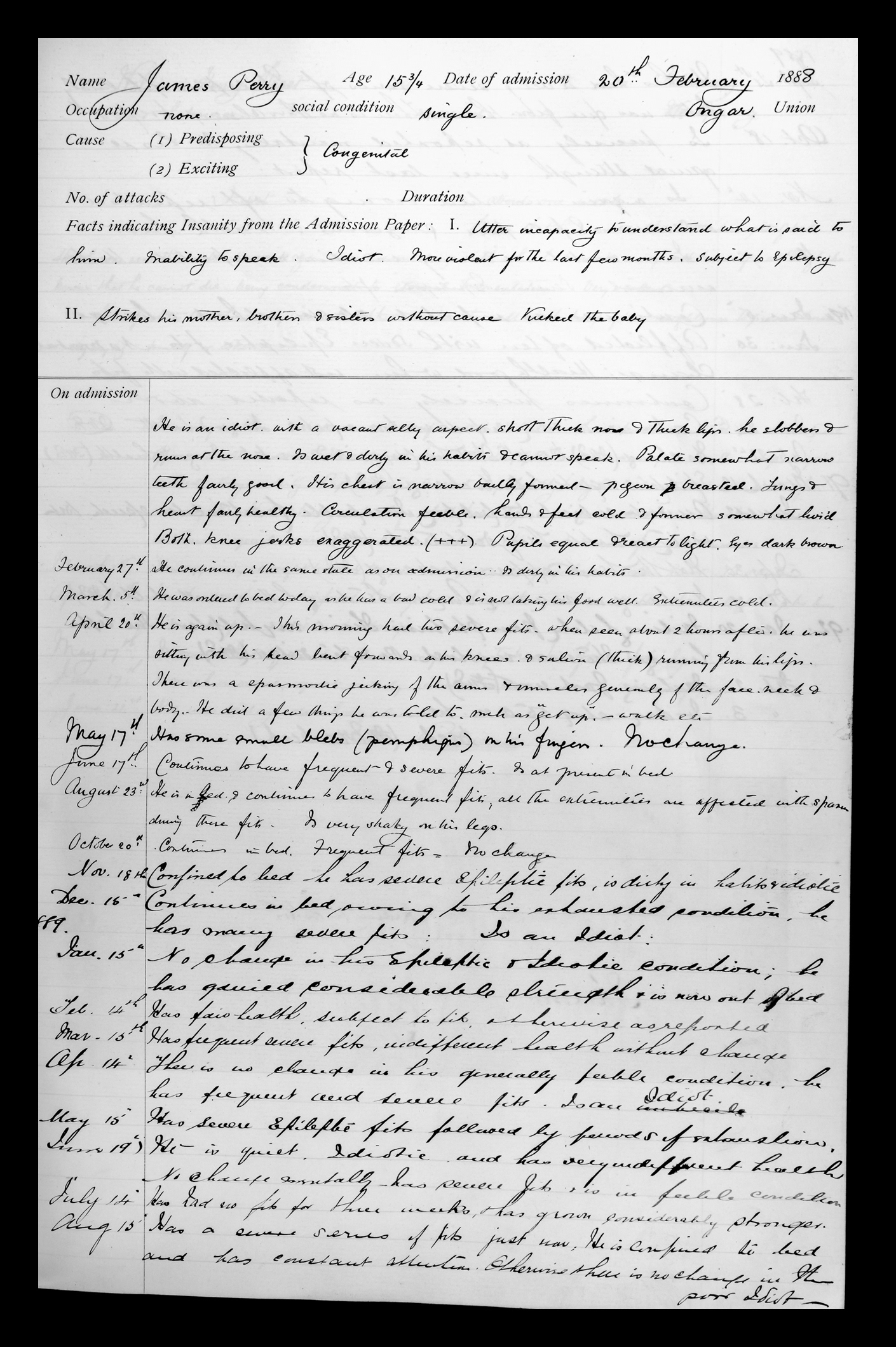
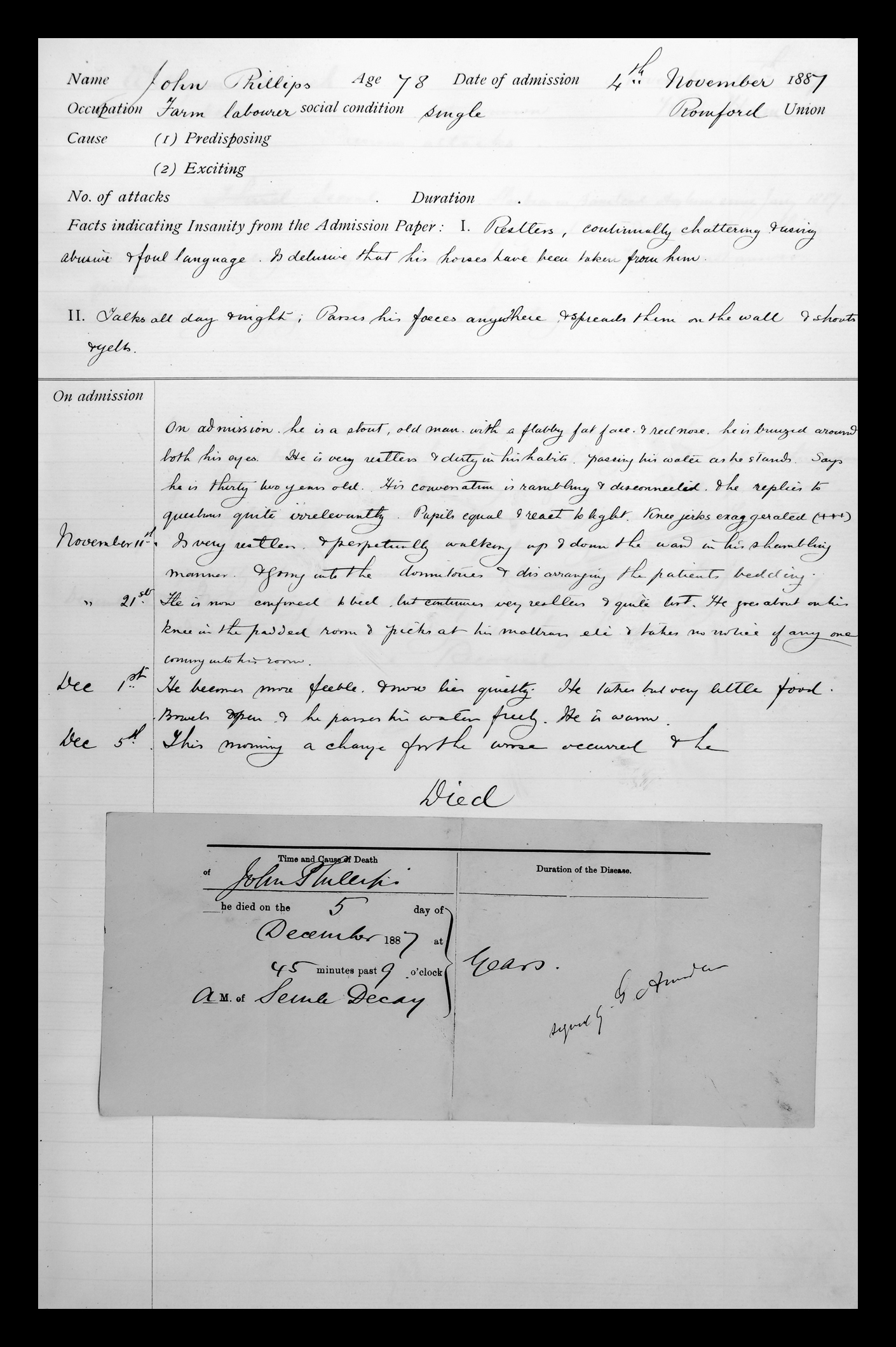
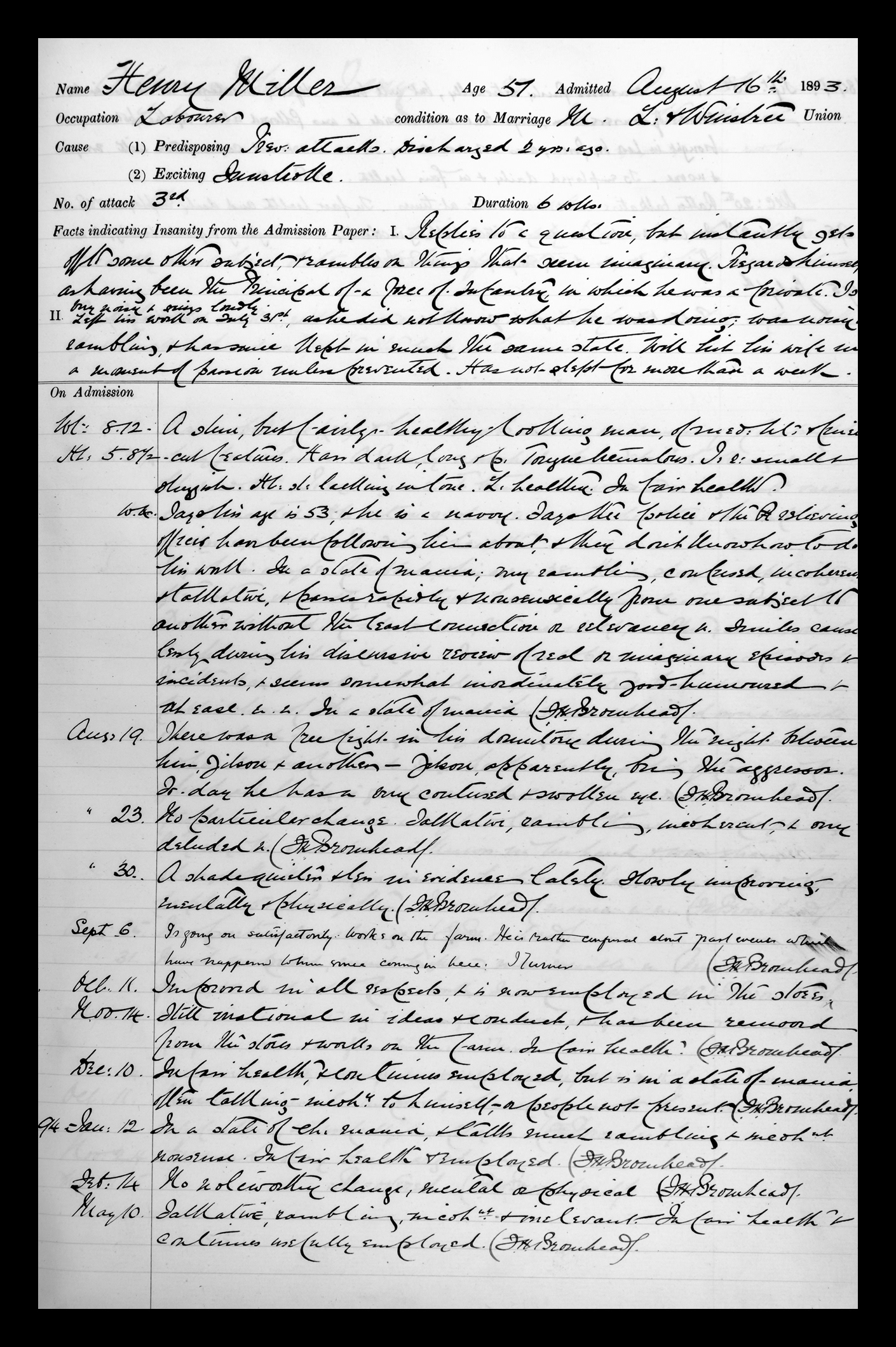
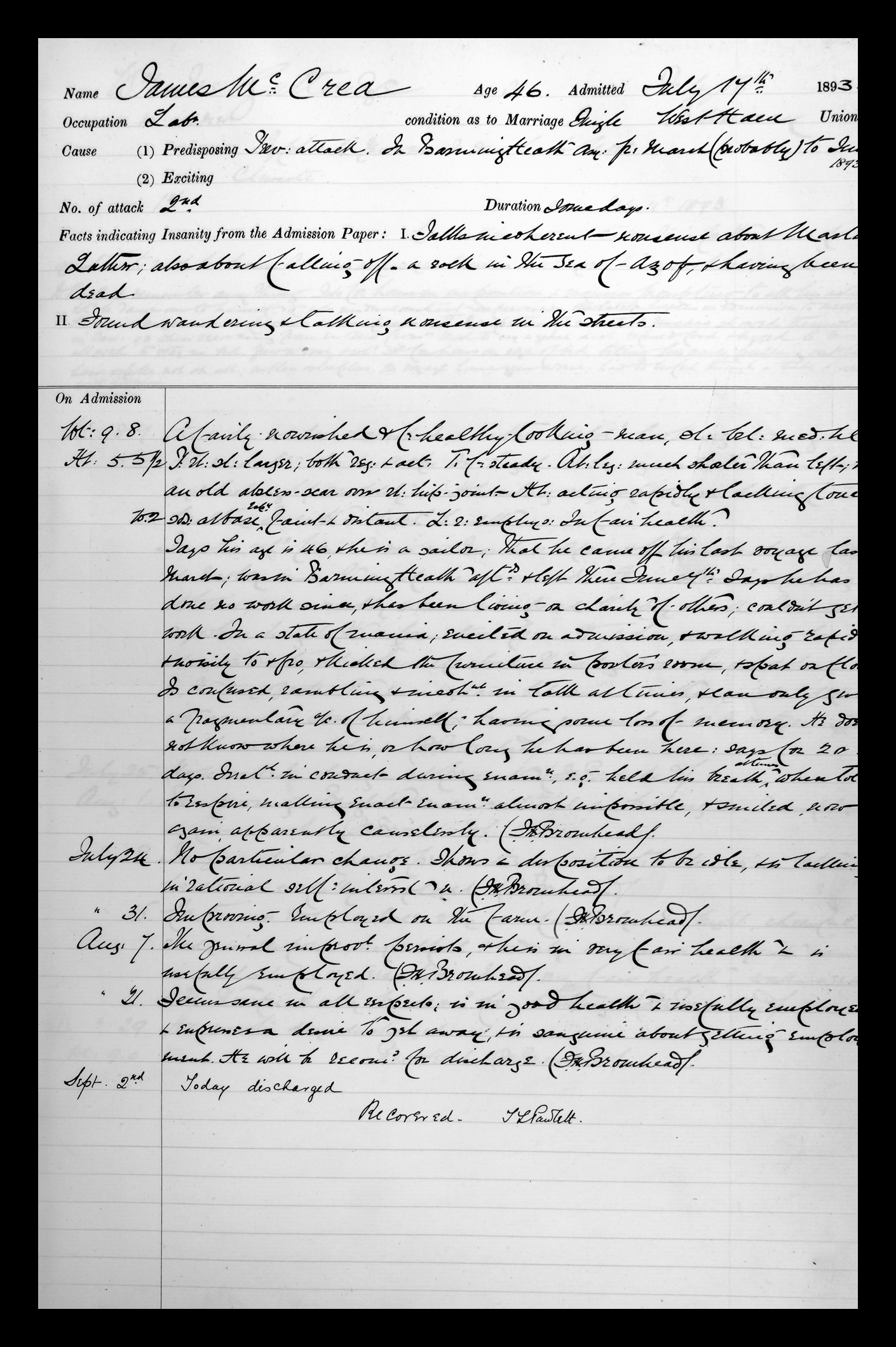
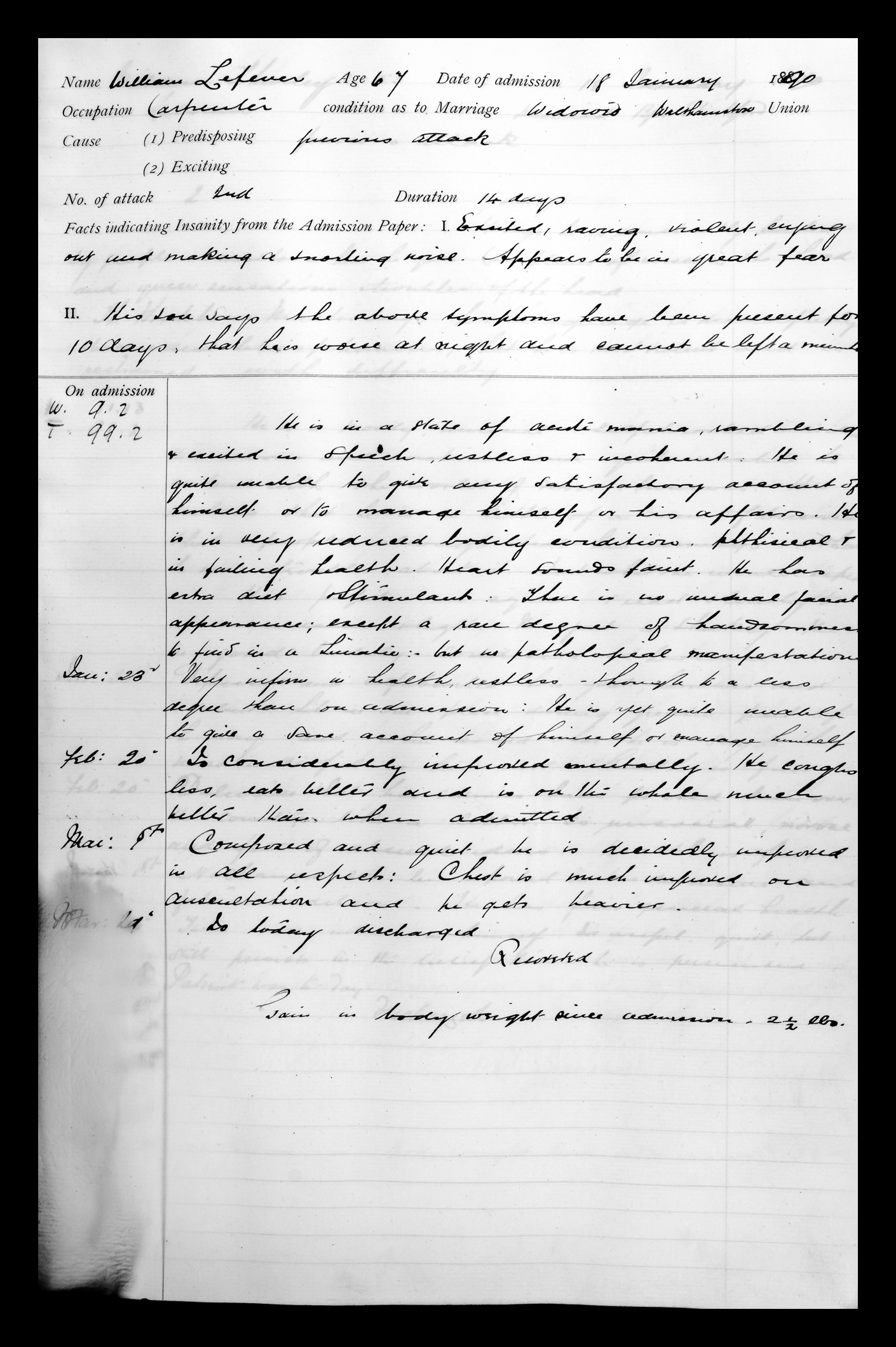
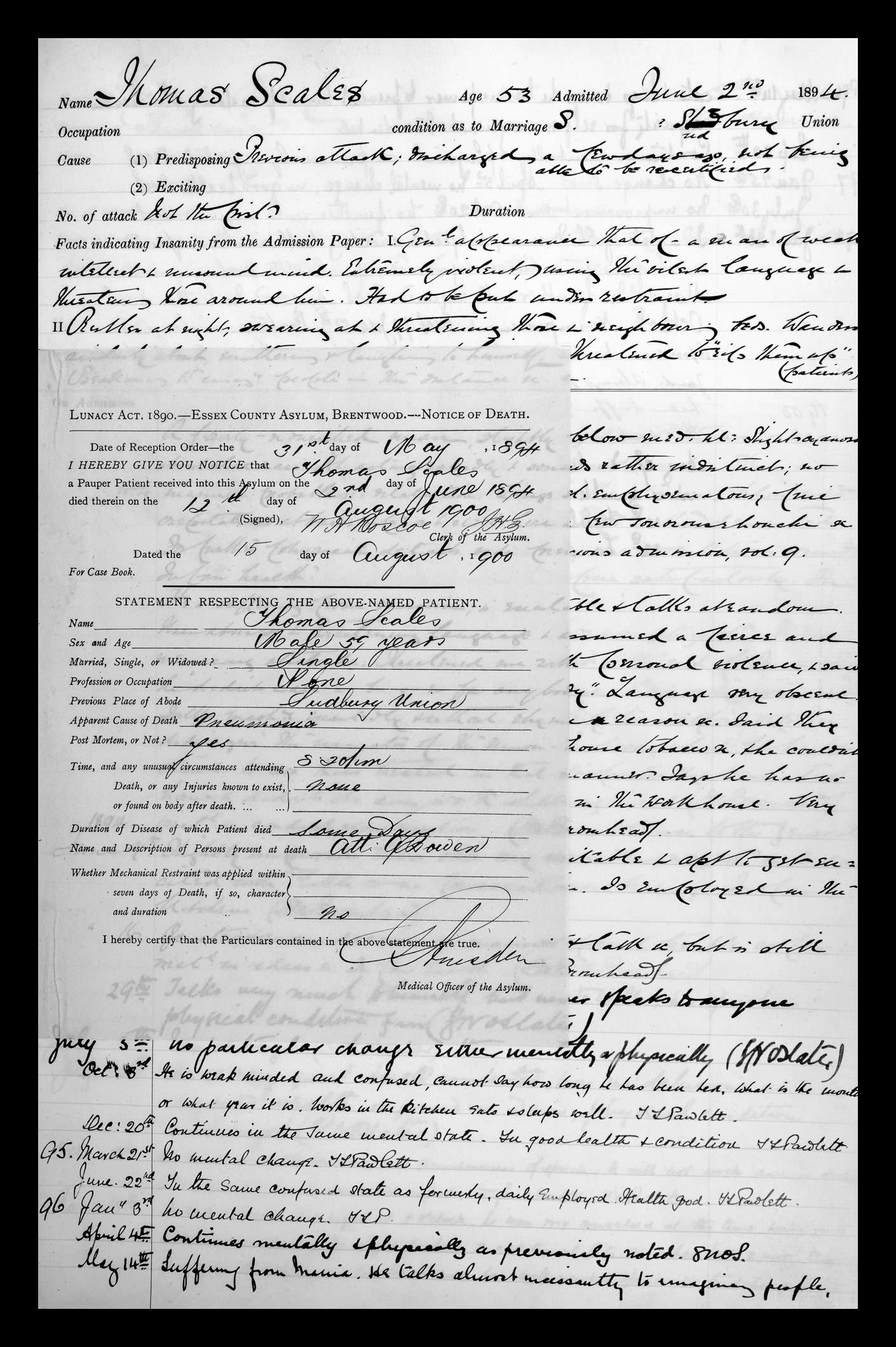
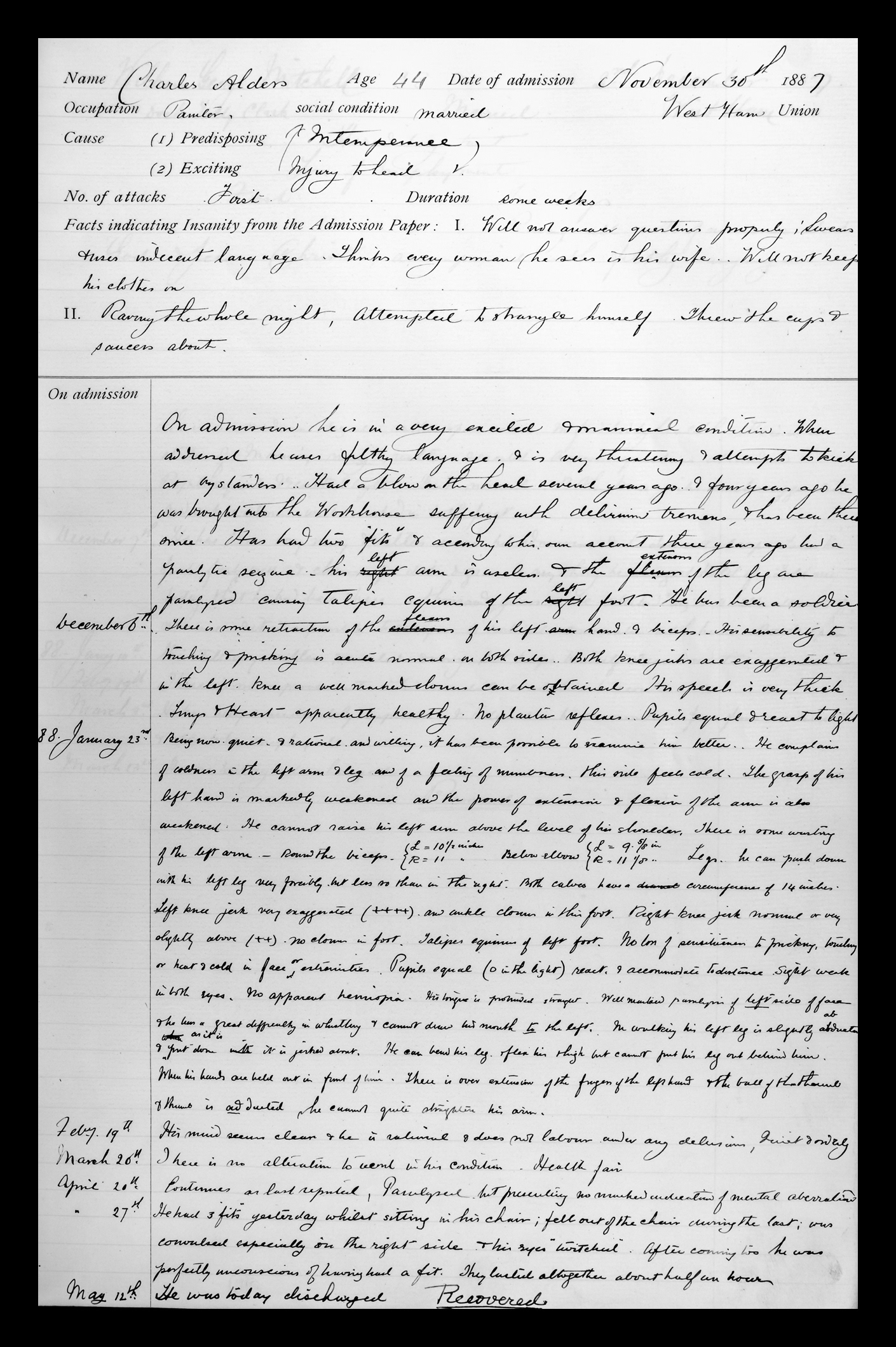
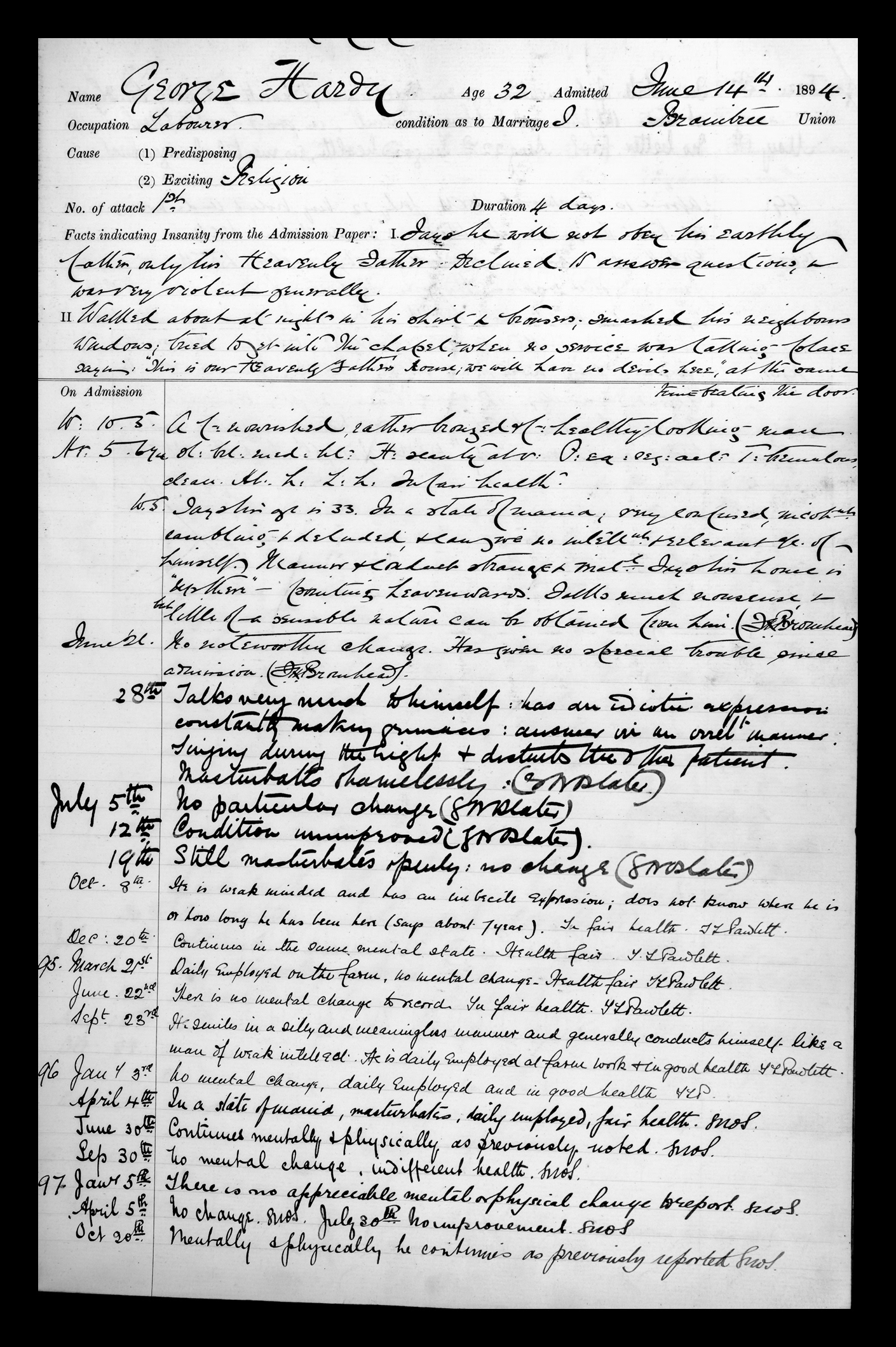
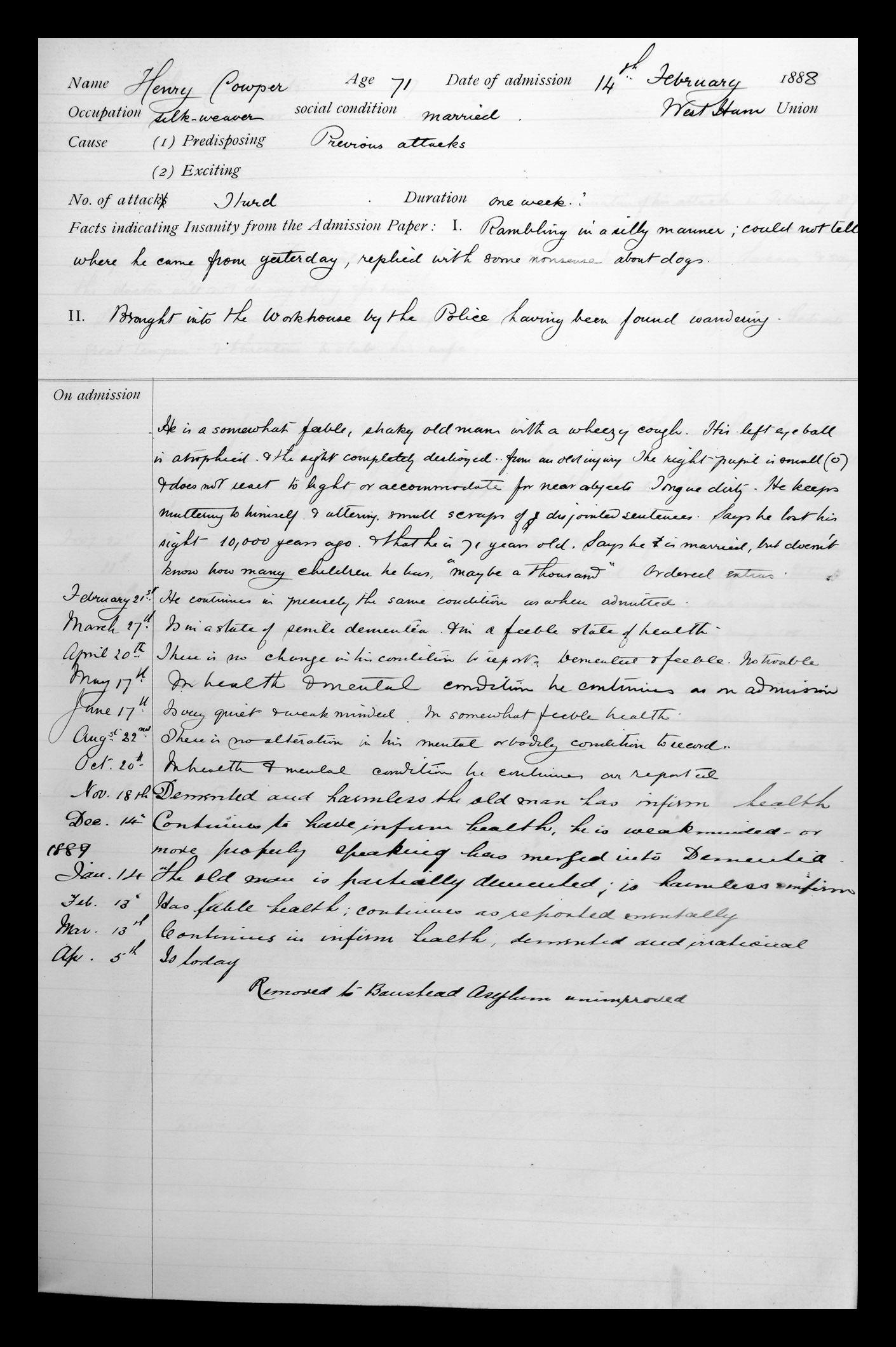
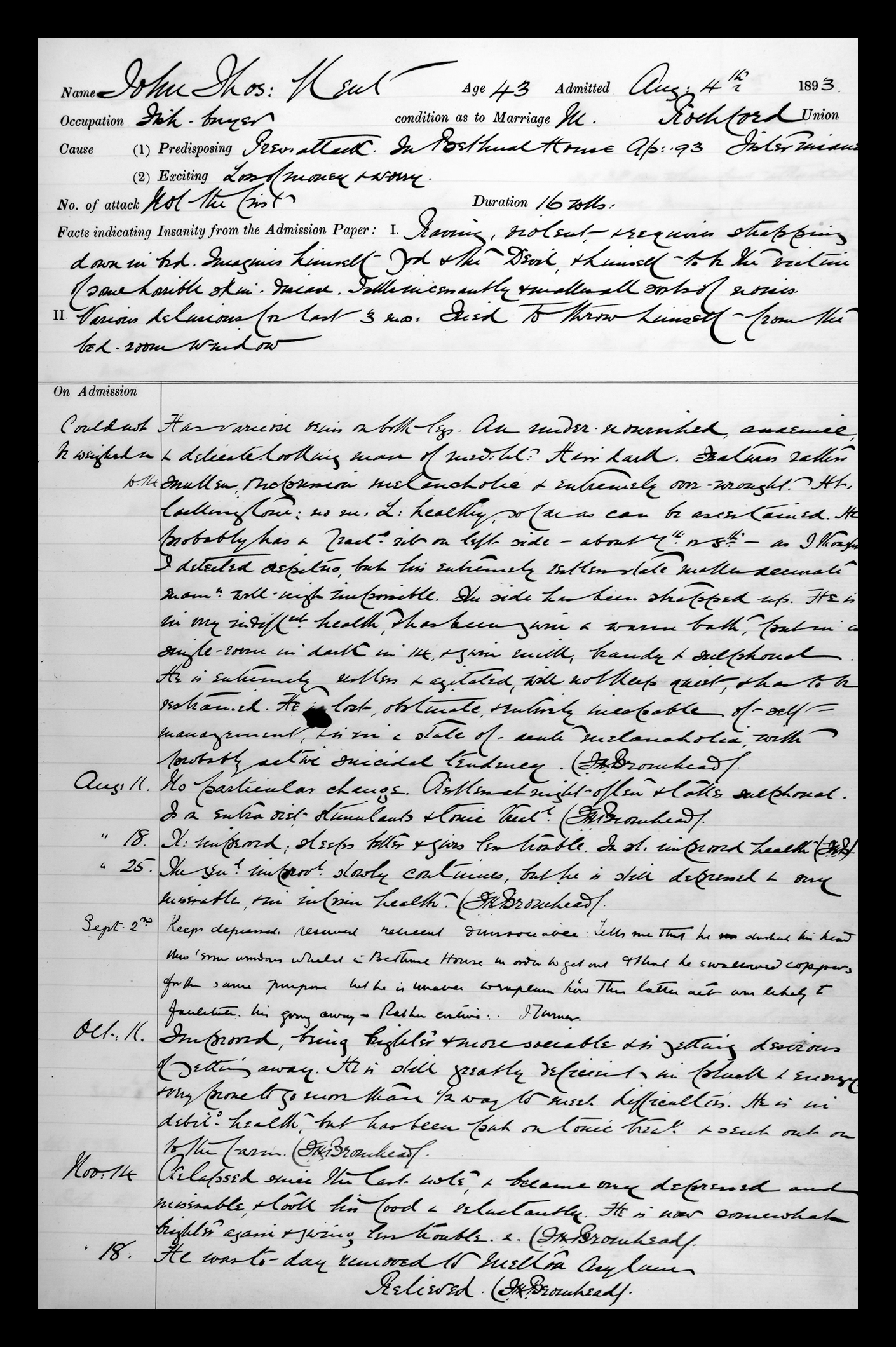
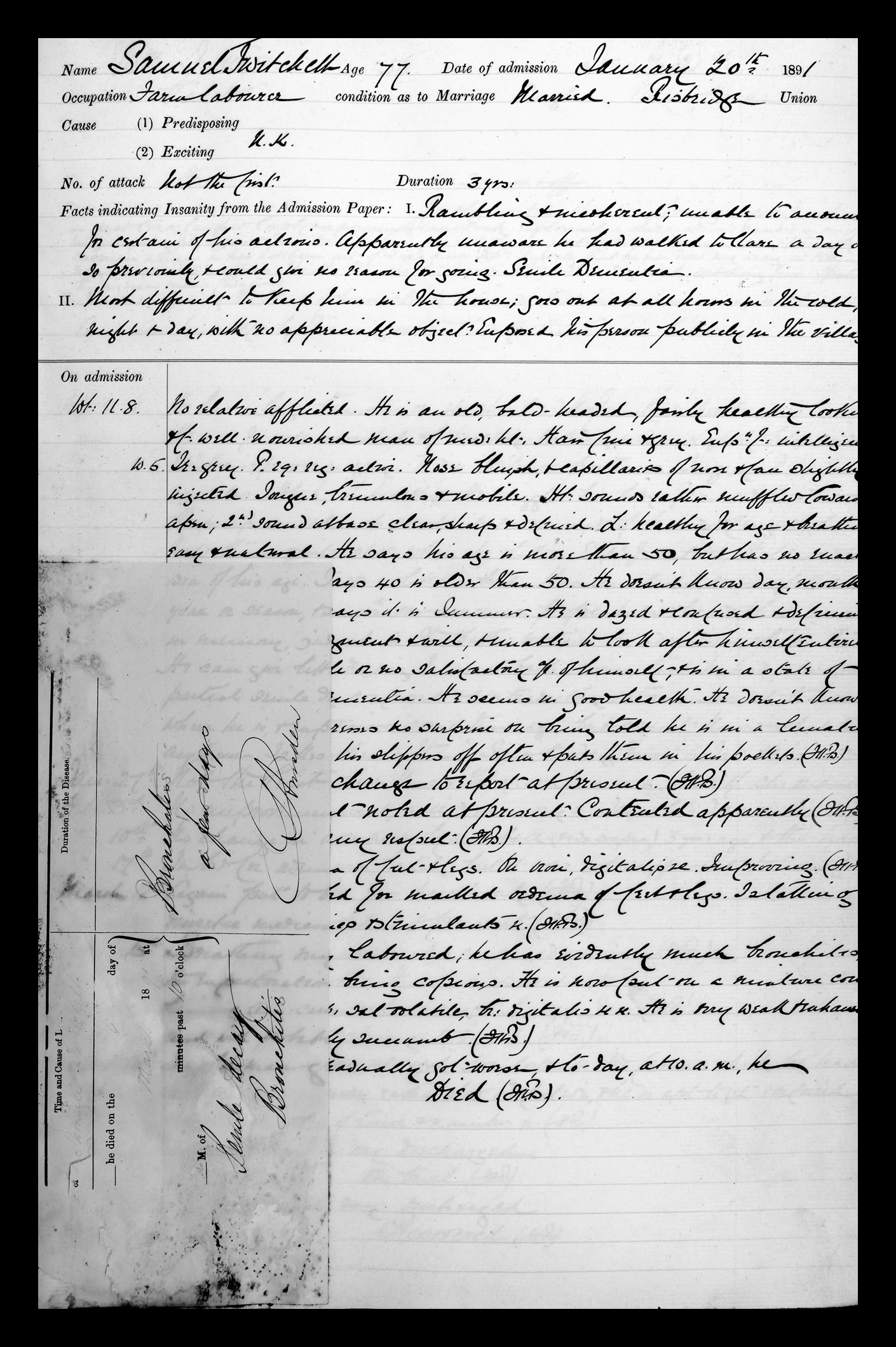
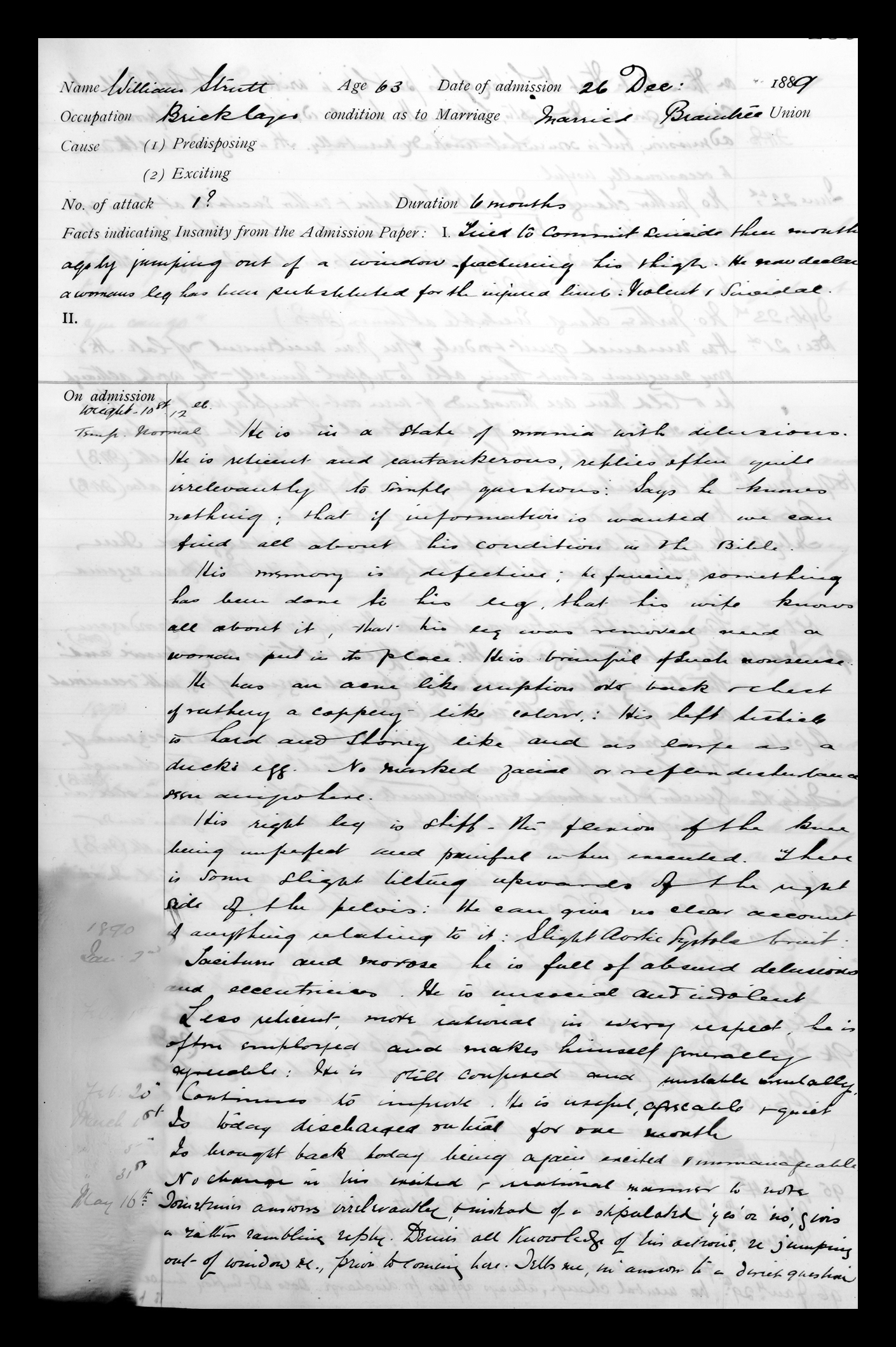
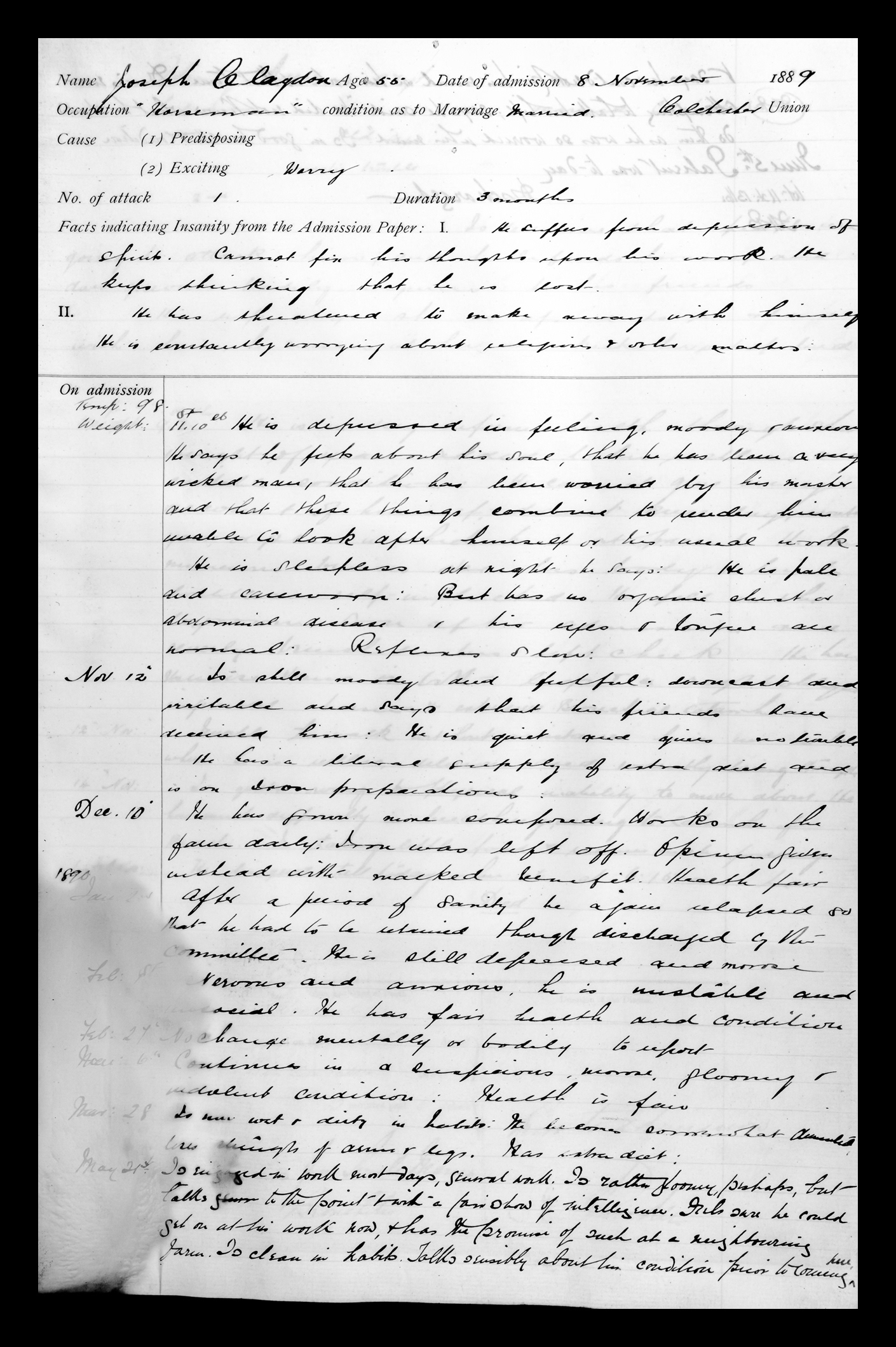
This work examines historical patient case books from the Essex Lunatic Asylum not as narratives to be told, but as structures through which lives were recorded and processed.
Each page contains fragments of a life — symptoms, behaviours, observations — yet these fragments remain partially inaccessible, embedded within a rigid and repetitive system.
Through accumulation and seriality, the work shifts from individual cases to the underlying mechanism: a process by which individuals were documented, classified, and ultimately removed from society.
Although grounded in historical material, the work points to a broader and ongoing condition: the persistence of systems that translate human lives into structured, readable forms.
Each life is visible, yet never fully recoverable.